






Reprinted from Jun He Law Review
Introduction
Recently, capital markets have generally rebounded, and the prices of emerging digital assets have also shown an upward trend, creating a favorable environment for high-net-worth families to grow their wealth. While the economy and asset values are rising, uncertainties such as the Sino-US trade friction and tightening cross-border regulations have also posed new challenges to asset security and long-term succession. This has significantly heightened interest among Chinese families in cross-border wealth management and stable inheritance. A recent offshore trust inheritance dispute involving the family of the founder of a well-known beverage company has brought the legal and practical issues of family trusts to the public's attention, highlighting the importance of institutionalized arrangements in complex market and cross-border environments. Following our previous overview of family trusts (see "Family Trusts: An Effective Tool for Entrepreneurs to Plan Family Wealth Succession and Avoid Disputes"), this article will further detail their operational mechanisms and design key points.
1. Operational Mechanism
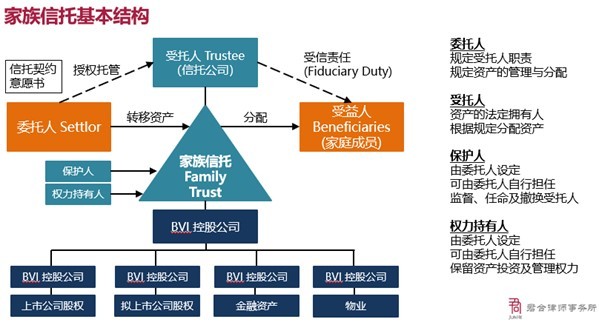
In modern family wealth management practices, family trusts are often constructed as a legal structure with clearly defined responsibilities and tiered holdings to achieve multiple goals, including asset segregation, control arrangements, intergenerational succession, and cross-border compliance. This type of structure usually consists of a trust layer, a holding entity layer, and an underlying asset layer, and operates in conjunction with several governance roles to form a relatively closed and stable family asset governance system (as shown in the figure below).
Related Posts
- CaiShen Full tech: Based in Beijing, Empowering Global Clients to Protect Their Rights with Professional Legal Services
- Global Overview of Vertical Monopoly Agreement Compliance — Southeast Asia (Part 1): Indonesia
- A Panorama of Family Trust Structure: Understanding the Operational Mechanism and Design Key Points of Family Trusts in One Article
- Basel Committee Releases "Framework for Voluntary Disclosure of Climate-Related Financial Risks"
With more than 100 licensed attorneys, the company is dedicated to providing professional legal services to clients worldwide.
Get in Touch
We respect your confidentiality and all information are protected.